|
I am a Ph.D. student in Mechanical Engineering at Vanderbilt University, where I work in the C* Controls Lab. My research involves developing models and controllers for dynamic, real-time control of soft and continuum robots, combining first-principles mechanics with data-driven system identification and validating these methods on hardware I design and build. My broader goal is to bridge physics-based and learned models to enable stable, dexterous interaction in unstructured environments. I hold an S.M. in Mechanical Engineering from MIT, an M.S. in Robotics Engineering from WPI, and a B.E. in Mechanical Engineering from Vanderbilt University. |

|
Selected PublicationsFull List |
|
|
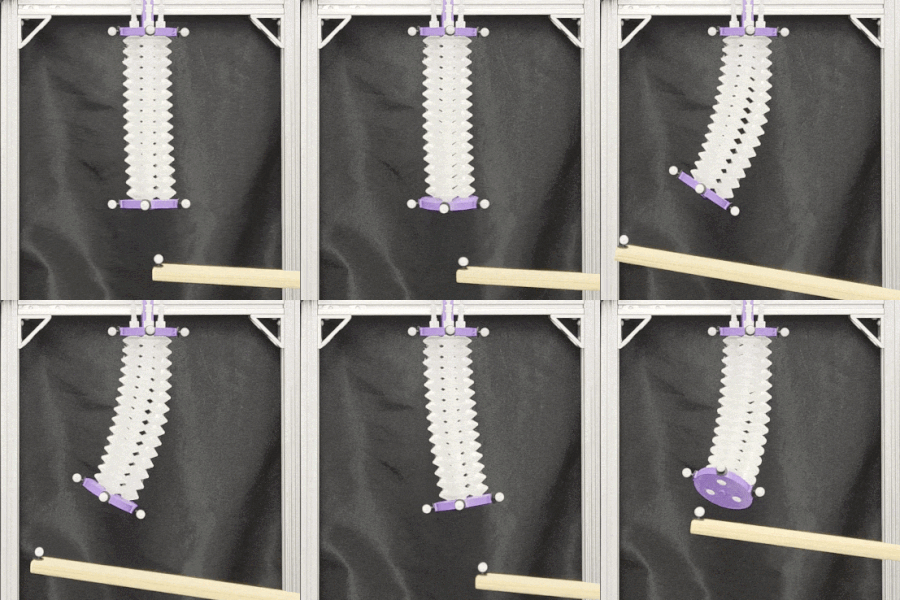
Nithin S. Kumar, Eric J. Barth Currently Under Review Video We develop a control-oriented learning framework that combines a nonlinear static model with learned residual dynamics for real-time 3D control of soft pneumatic actuators. Experiments achieve ~1 mm RMSE at 10 mm/s and <10 mm RMSE at 100 mm/s, while enabling stable user-guided motion exceeding 25 m/s² peak acceleration and real-time obstacle avoidance. The learned model also predicts closed-loop stability, successfully distinguishing stable, marginally stable, and unstable behavior prior to deployment. |
|
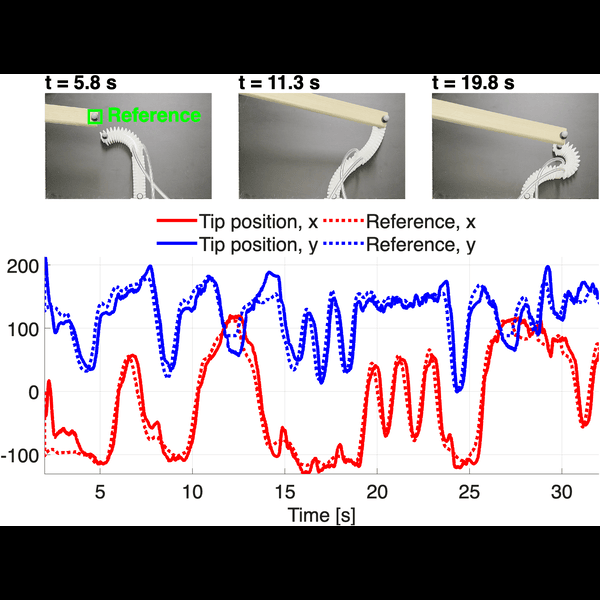
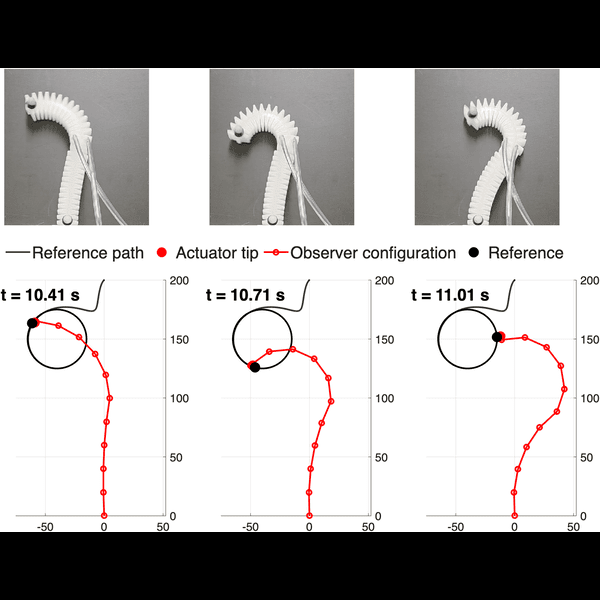
Nithin S. Kumar, Joshua Gaston, D. Caleb Rucker, Eric J. Barth Currently Under Review We extend a planar discrete elastic rod model for real-time dynamic task-space control of soft pneumatic actuators. The sparse formulation efficiently handles holonomic and nonholonomic constraints, enabling a 10-rod model and observer to run at 1 kHz while achieving ~2 mm RMSE on precision trajectories and stable tracking up to 2 Hz and 37 cm/s. We demonstrate model generalizability across three different actuator geometries, real-time tracking of user-generated references, and observer-based control that reduces tip-tracking error by 45% on average without direct tip sensing. |
|
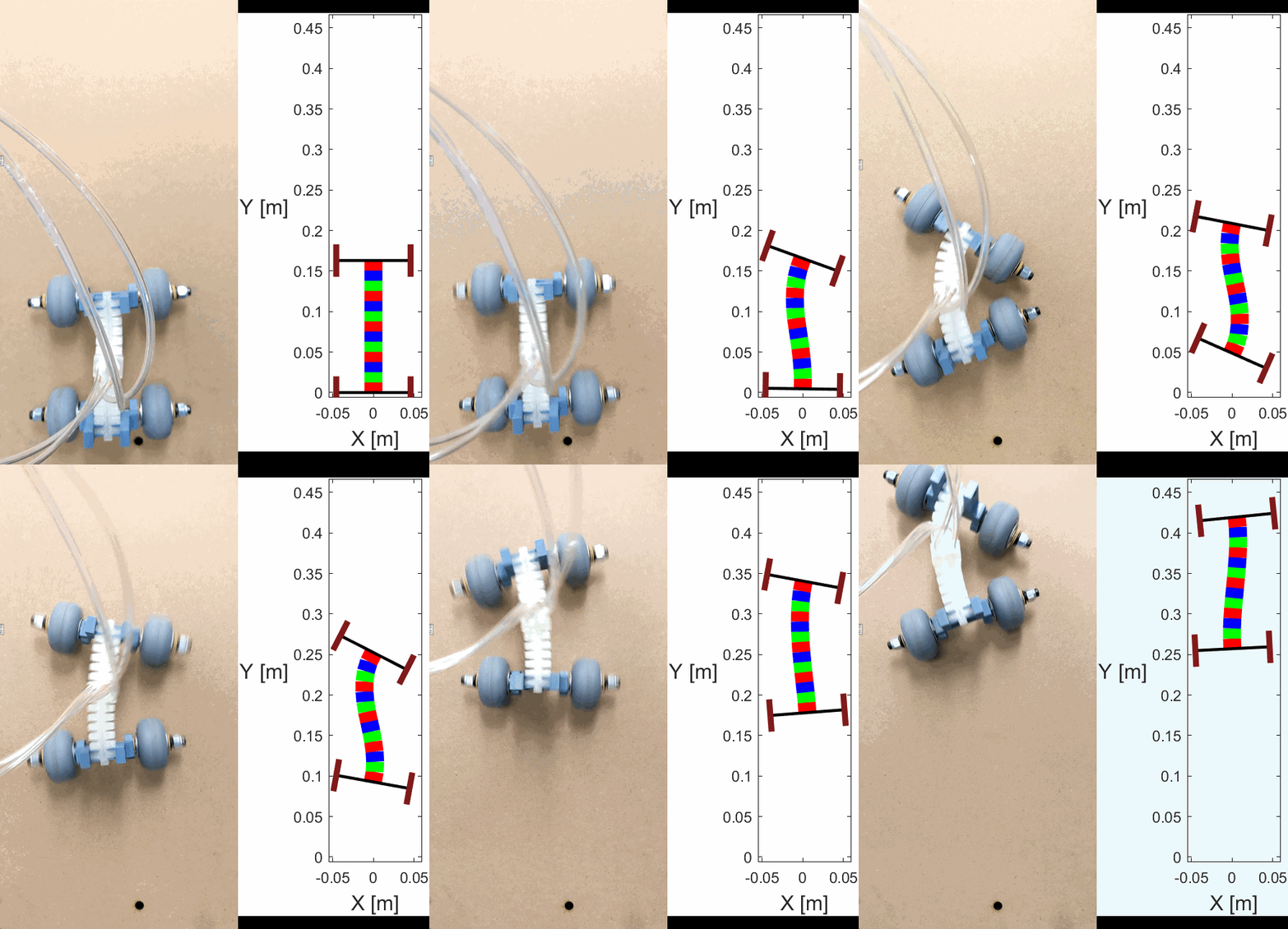
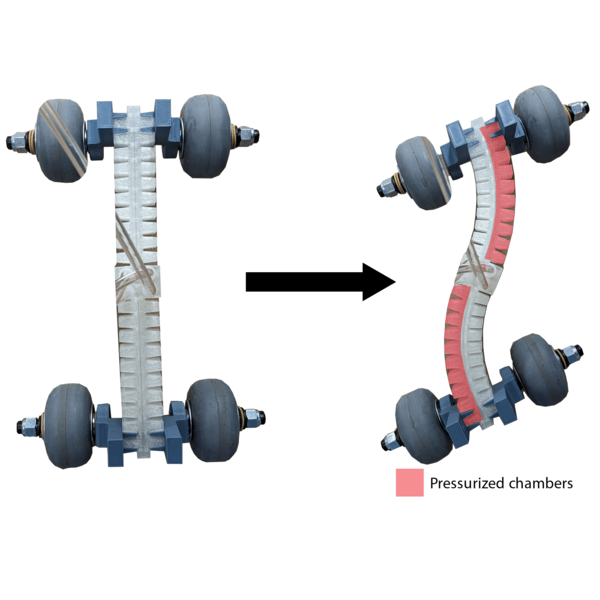
Nithin S. Kumar, John E. Peters, Sung Y. Kim, Joshua Gaston, D. Caleb Rucker, Eric J. Barth Journal of Mechanisms and Robotics, 2026 Video We develop a constrained Lagrangian model to capture the highly dynamic, non-holonomic based locomotion of a pneumatically actuated wheeled soft robot. The robot achieves speeds up to 22 cm/s (1.38 body lengths/s) and demonstrates forward, reverse, and circular locomotion. We validate the modeling framework across three different robot designs, accurately reproducing their experimentally observed configuration and velocity trends. |
|
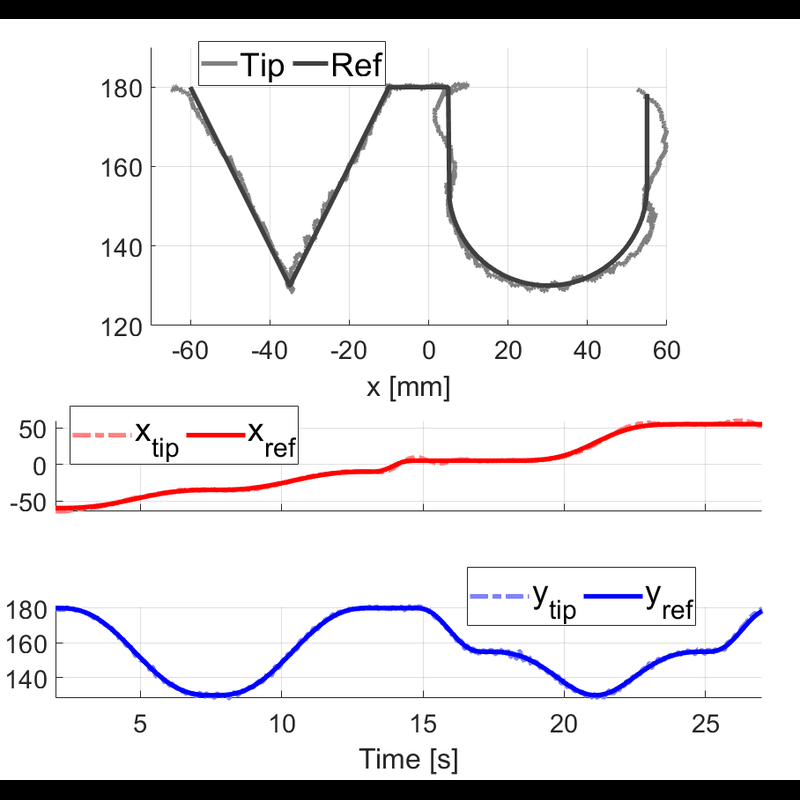
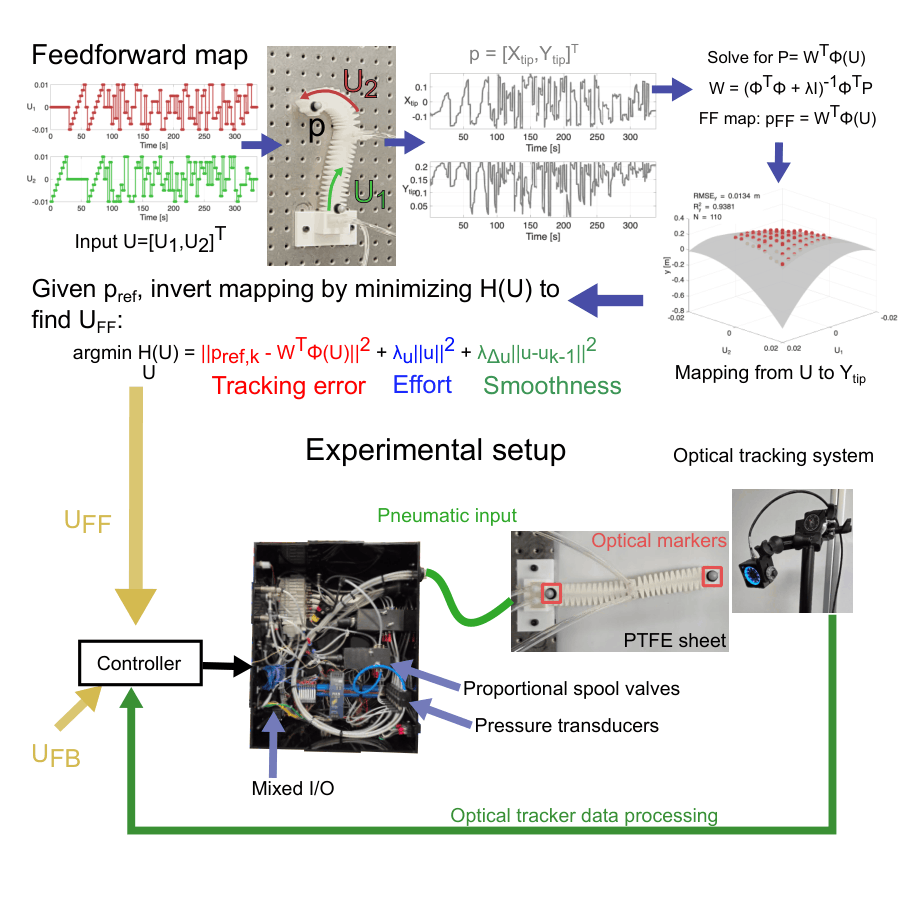
Nithin S. Kumar, John E. Peters, Thomas Beckers, Eric J. Barth ASME Letters in Dynamic Systems and Control, 2026 We develop a data-driven modeling framework that combines a nonlinear feedforward map with EDMDc residual dynamics for control of soft pneumatic actuators. Experiments achieve 2 mm RMSE on shape-rich trajectories and <10 mm RMSE at tip speeds exceeding 100 mm/s. The learned model also enables closed-loop stability prediction without requiring an explicit first-principles dynamic model. |
|
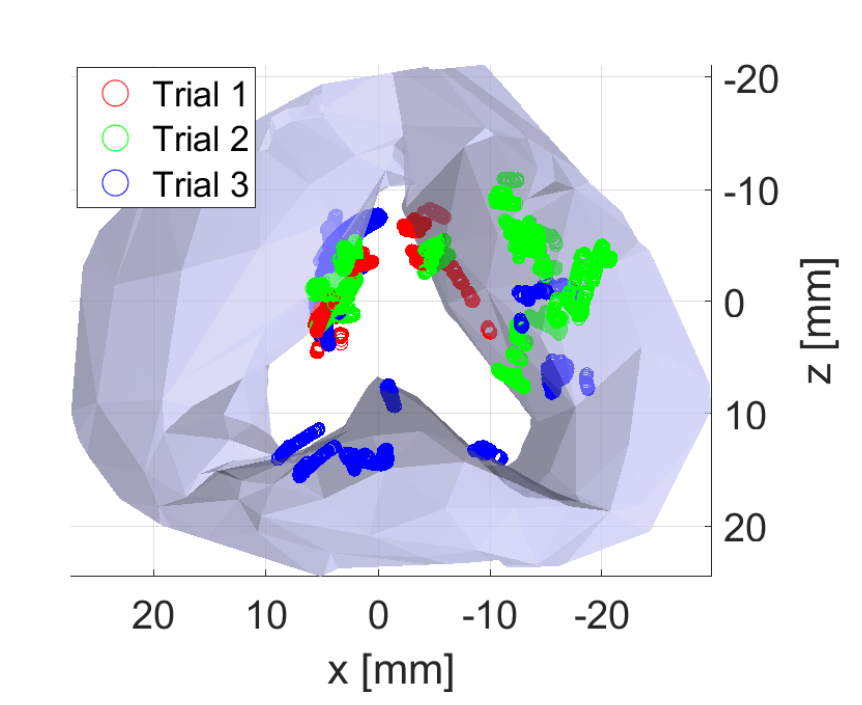
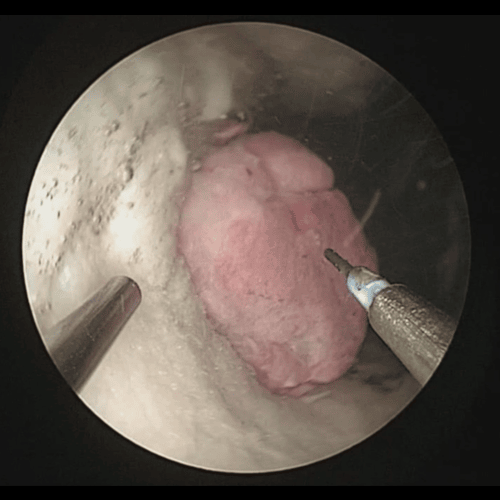
Nithin S. Kumar, Jason A. Shrand, Susheela Sharma, S. Duke Herrell III, Nicholas L. Kavoussi, Ahmed Ghazi, Eric J. Barth, Ipek Oguz, Alan Kuntz, Robert J. Webster III Hamlyn Symposium on Medical Robotics (HSMR), 2025 We develop an impedance-based contact sensing method that enables a concentric tube robot to collect tissue surface points for robot-to-anatomy registration during endoscopic procedures. Experiments in an anthropomorphic prostate phantom achieve a mean surface registration error of 2.11 ± 1.01 mm, demonstrating contact sensing as an additional source of information for improving situational awareness in robot-assisted surgery. |
|
|